News
Glencore and Mercuria Target Venezuela Smelter Restart: Satellite Verification of Venalum
As global commodity trading houses compete to revive Latin America's largest aluminium smelter, satellite imagery provides physical verification of power substations, potline thermal activity, and raw material staging.
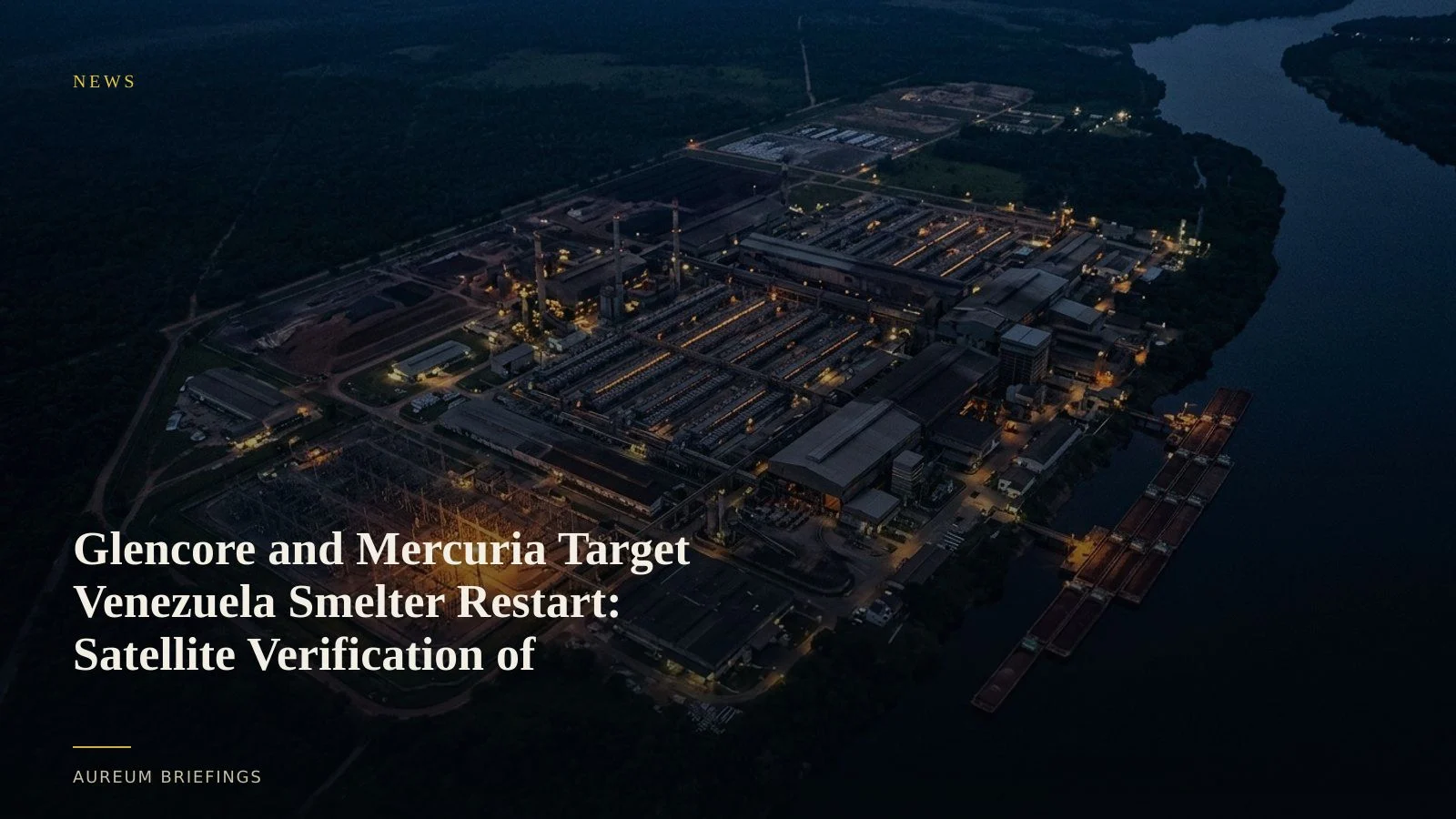
Trading houses compete for Venalum as Latin American trade ties shift
Global commodity trading giants Glencore and Mercuria are competing for a deal to revive Venezuela's Venalum aluminum smelter, the massive industrial complex in Bolivar state that has sat largely idle following years of severe power shortages and structural underinvestment.
The bidding war unfolds alongside broader geopolitical shifts and renewed diplomatic re-engagement across Latin America. For metals traders and macro investors, evaluating whether a multi-billion-dollar smelter restart can actually materialize requires looking past corporate announcements down to ground-level physical operations.
Verifying power grid feed and potline heat with satellite passes
Aluminium smelting is exceptionally energy-intensive, requiring steady high-voltage power to run electrolytic cell lines. Historical baselines from primary aluminium smelter power benchmarks show that potline restarts require massive electrical loads drawing continuous megawatt capacity from local hydro grids.
Using Sentinel-2 thermal and optical satellite passes, satellite-backed analysis measures whether transformer yards show active thermal dissipation and whether potline rooftops display operational heat signatures. While large institutions buy enterprise satellite analytics platforms for custom industrial indices, individual investors can verify physical ground truth directly as satellite coverage lands.
Tracking bauxite supply and Orinoco river barge logistics
Restarting primary aluminium output requires a continuous stream of raw material inputs, specifically alumina and bauxite. According to mineral commodity statistics on bauxite and alumina supply, raw material bottlenecks frequently delay smelter ramp-ups even when power grid connections are restored.
Satellite optical passes track stockpile heights at the Venalum bulk terminal along the Orinoco River, verifying barge arrivals and conveyor belt activity. If raw material yards remain empty, headlines announcing early joint ventures face immediate operational friction.
How retail investors verify physical industrial signals
Without an institutional research desk, individual investors usually rely on corporate press releases or lagged trade prints. By the time official production figures publish, physical supply shifts are already priced into metal futures.
Query allows investors to ask direct questions about industrial assets, returning verified satellite evidence when coverage lands. For ongoing monitoring, Track offers hand-built KPI boards on key metal smelters, ports, and energy corridors so you can follow physical supply shifts without complex GIS software.
Verify industrial physical signals with Aureum
Join the private beta to ask satellite questions about smelter restarts, power grids, and global commodity supply chains.